
When clients commission a professional and accredited jewellery or watch valuation, the natural focus falls upon on the finished report, the details and figures detailed therein. They expect the report to be accurate, well researched, reflective of current market conditions, and suitable for the specified purpose of the valuation.
What is less visible, however, is the continual learning and professional development that underpins every registered valuation. In order to become a registered valuer, and to maintain that accreditation, each valuer must log multiple hours of professional development.
For the independent valuer, professional development is not simply desirable, but a responsibility. Every valuation should be founded on evidence, research and informed professional judgement, not mere assumption or outdated knowledge.
Exhibited Jewellery Collections
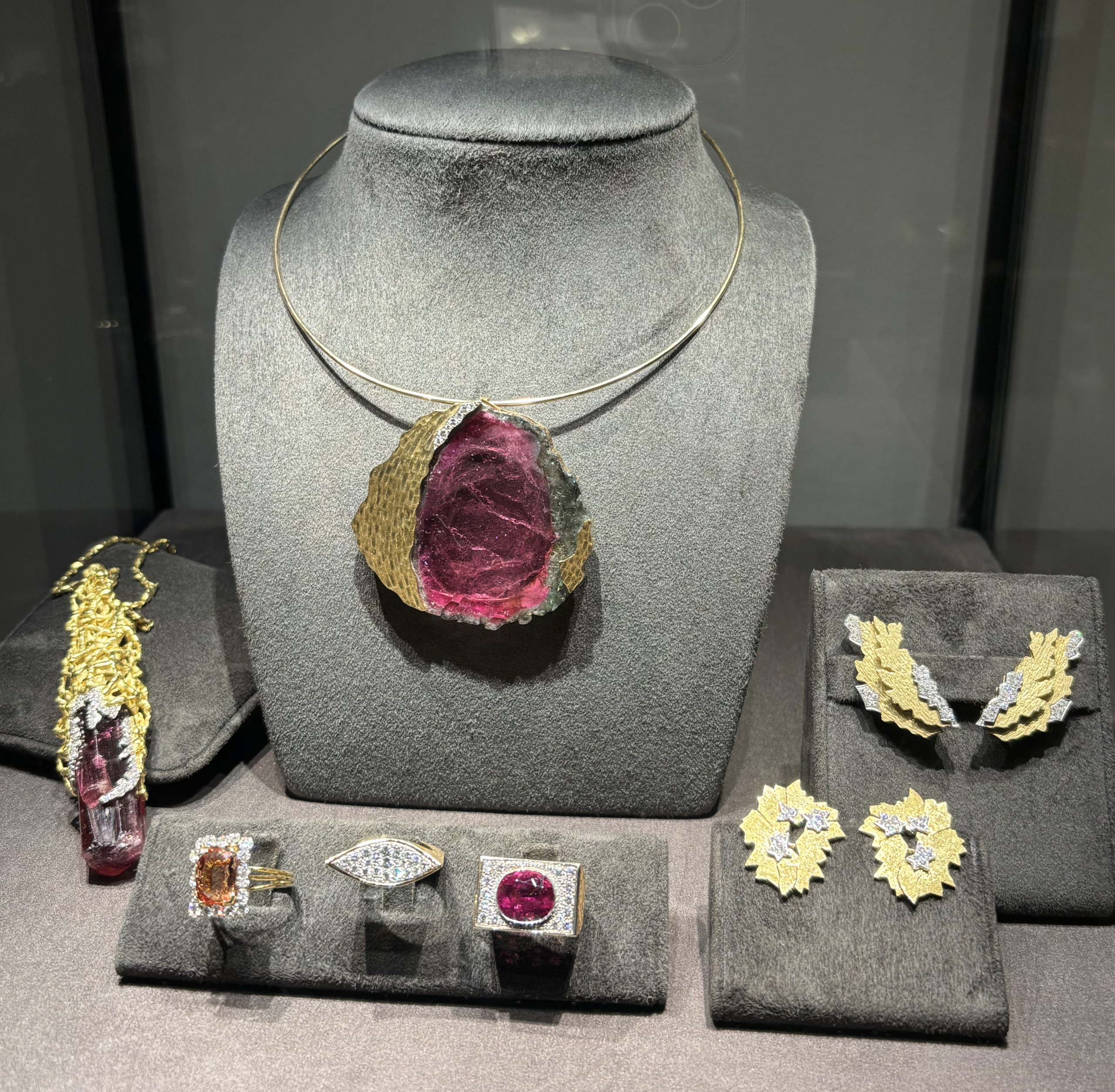
Grima Jewellery on display at the Tomasso Gallery. This incredible exhibition runs just one week a year and forms hundreds of privately owned Andrew Grima and Grima Jewellery watches, jewels and objet d’art.
One of the most valuable sources for a valuer naturally lies within the world’s great museums and specialist exhibitions. They preserve exceptional examples of craftsmanship, document the evolution of design and provide opportunities to study pieces first hand, in a way that photographs, auction catalogues and reference books simply cannot replicate.
Observing an original jewel in person allows a valuer to appreciate construction techniques, proportions, craftsmanship, wear patterns, repairs and the subtle qualities that distinguish exceptional pieces from ordinary examples. These observations become invaluable when assessing authenticity, originality and ultimately value.
The René Lalique Room at the Calouste Gulbenkian Museum
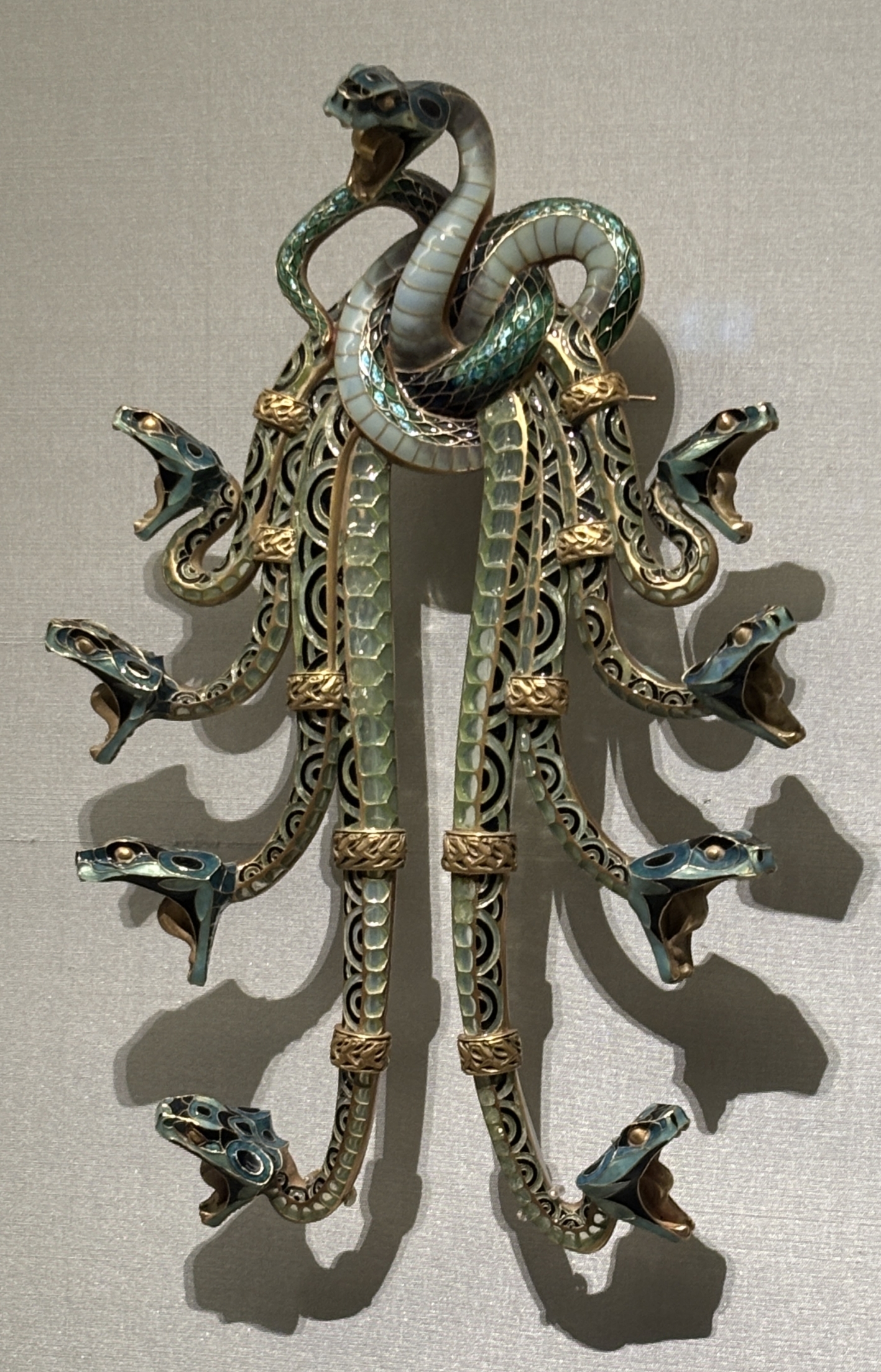
René Lalique ‘Serpents Corsage’ circa 1898.
Among the finest resources available to jewellery professionals is the René Lalique Room at the Calouste Gulbenkian Museum in Lisbon.
Housing one of the world’s most important collections of Lalique’s work, the gallery contains almost 200 objects acquired directly by Calouste Gulbenkian during Lalique’s lifetime, including around eighty jewellery pieces alongside glass, silverwork and decorative objects. The collection offers an extraordinary insight into one of the most influential designers of the Art Nouveau movement.
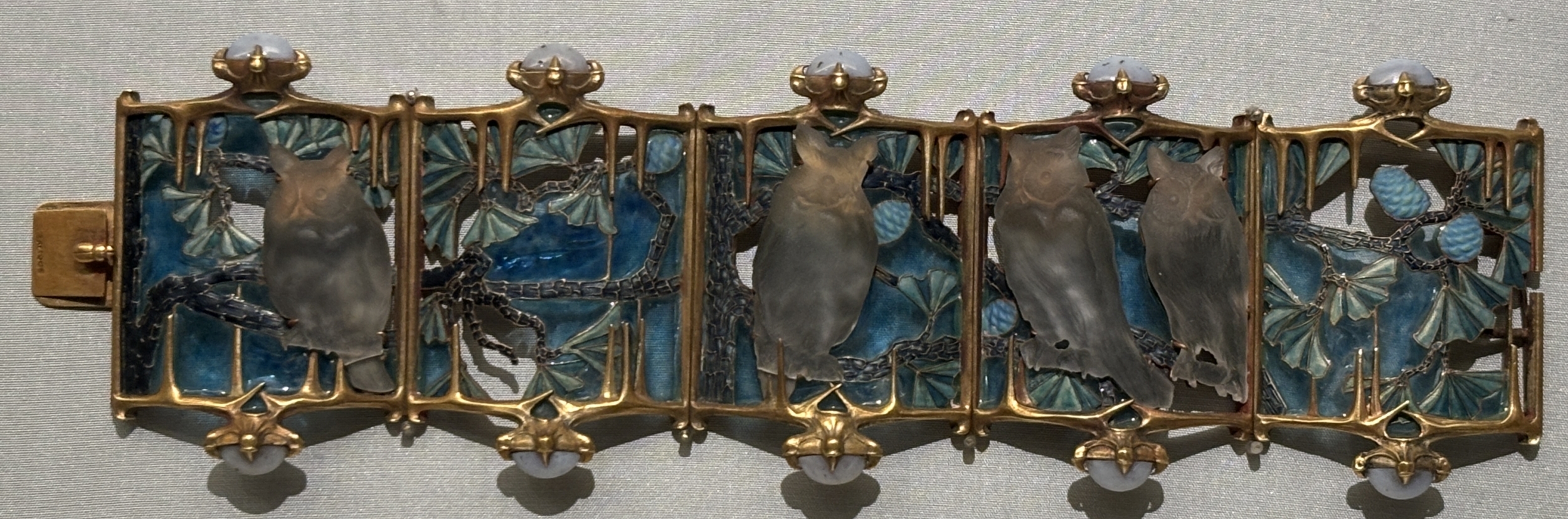
René Lalique ‘Owl’ bracelet, circa 1900-1901.
Studying original Lalique jewellery reveals the remarkable innovation that defined his work. Rather than relying solely on precious gemstones, Lalique embraced materials such as horn, enamel, moonstone, opal, carved rock crystal and glass, elevating artistic design above intrinsic material value. His jewellery reminds us that the significance of an object cannot be measured simply by the weight of its gold or the size of its diamonds.
The collection also demonstrates the evolution of Lalique’s style, from flowing Art Nouveau naturalism to the cleaner forms that anticipated Art Deco, and highlights the importance of understanding historical context when assessing value.
For valuers, opportunities to study museum-quality examples strengthen our ability to recognise original craftsmanship, understand historical manufacturing techniques and identify later alterations or restorations that may influence both authenticity and value.
Examining the Archives
Specialist exhibitions and educational programmes organised by leading institutions, such as Van Cleef & Arpels similarly add to a breadth and depth of knowledge. Established in 2012 with the support of Van Cleef & Arpels, L’Ecole School of Jewelry Arts regularly hosts a wonderful programme of exhibitions – frequently putting on display unseen pieces from Van Cleef & Arpels’ astounding archive. Similarly, loaned pieces from the Cartier archive, most recently seen at the Victoria & Albert’s Cartier exhibition last year present the valuer with an opportunity to place these pieces within the context of their existing knowledge and understanding.
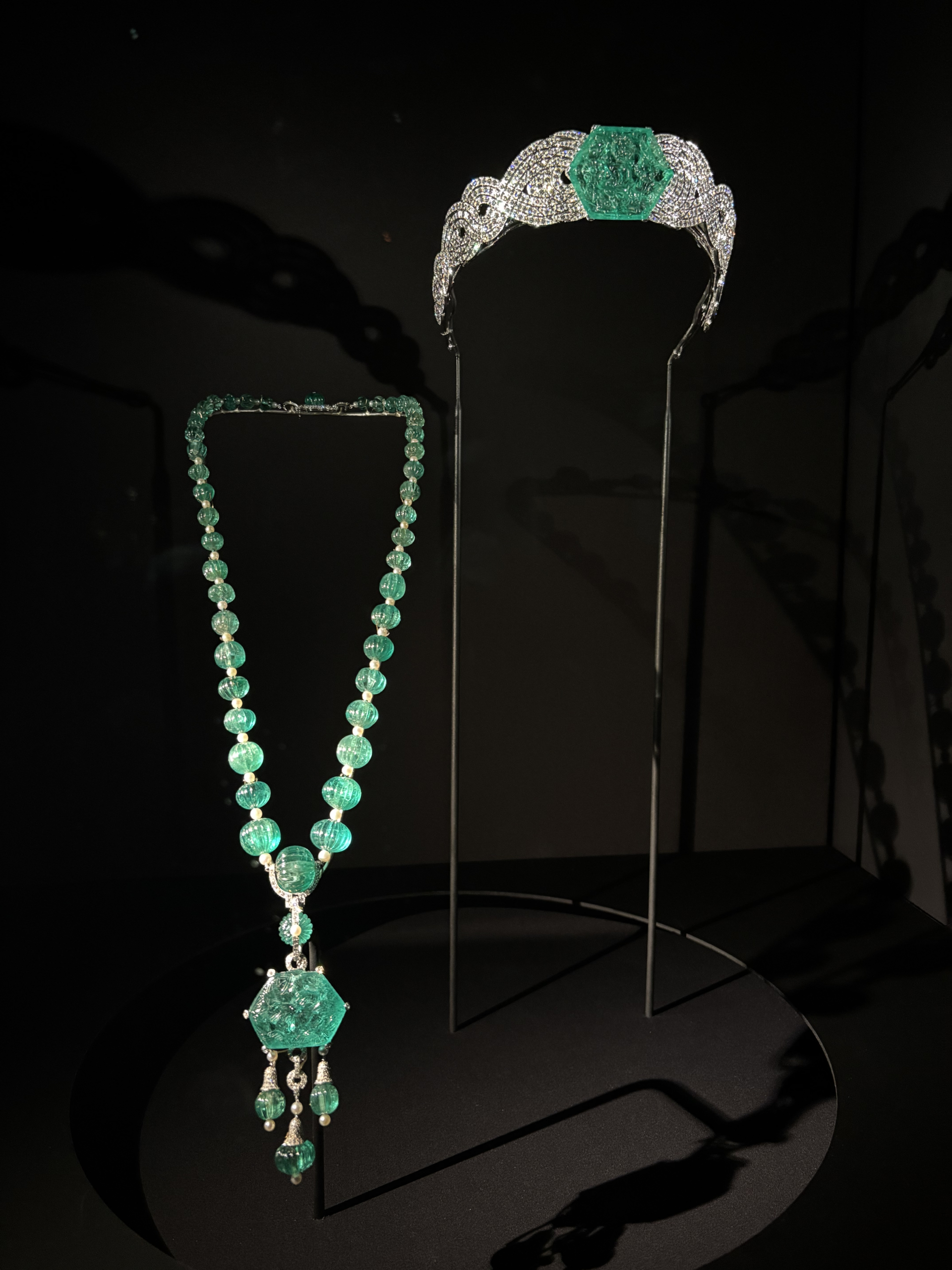
Exhibited at the Victoria & Albert Museum’s Cartier Exhibition 2025.
An emerald and diamond sautoir, Cartier New York, 1925. Cartier Collection.
A Cartier Bérénice emerald and diamond tiara, 2012. Private Collection.
Rather than simply displaying beautiful and jaw-dropping jewels, these archival and temporary exhibitions explore the history of jewellery through archival research, gemmology, craftsmanship and cultural context.
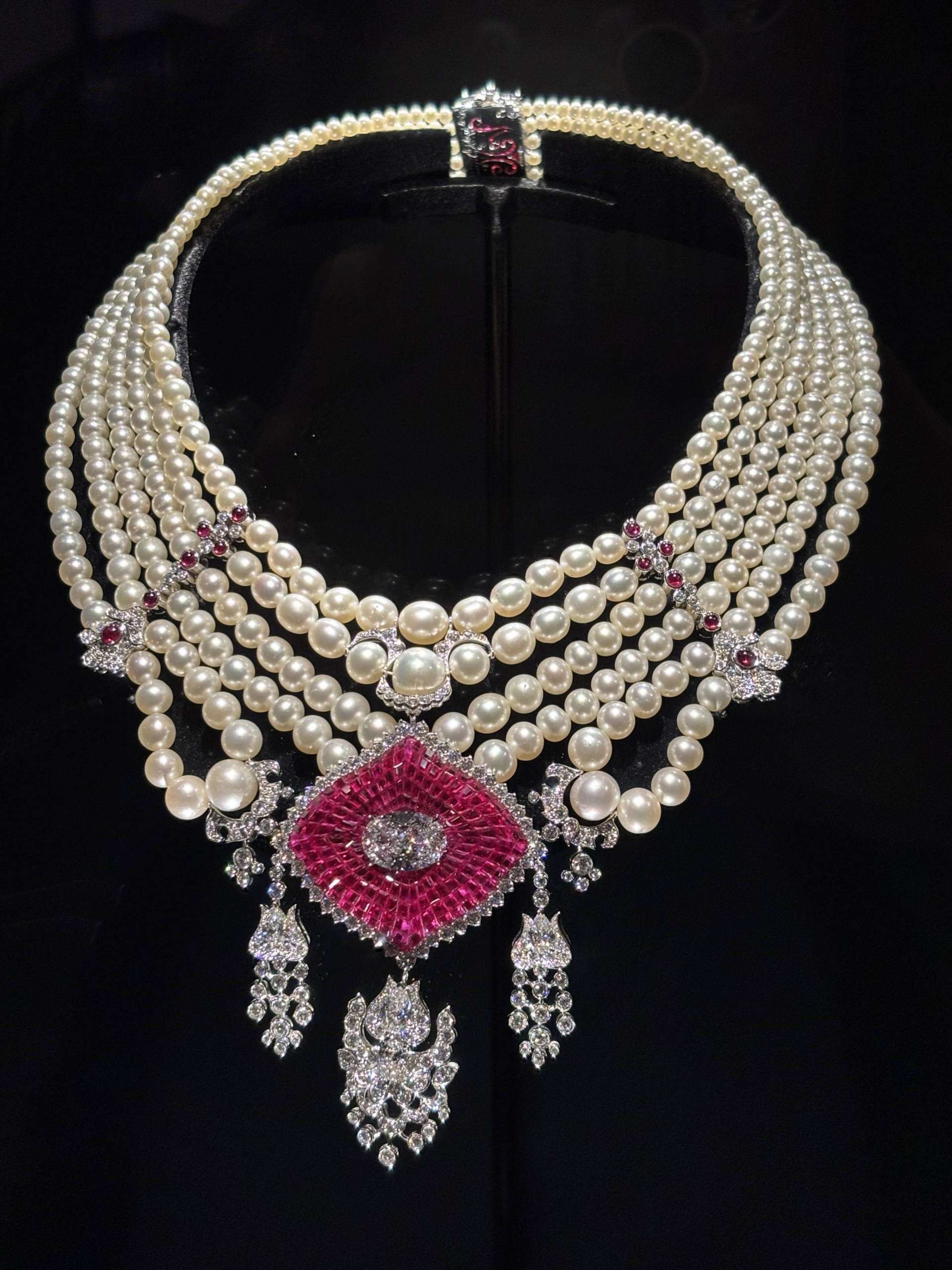
Exhibited at L’Ecole School of Jewellery Arts, Paris City of Pearls Exhibition 2024.
Van Cleef & Arpels ‘Cadeau Imperial’ pearl, ruby and diamond collar necklace, 2011. Van Cleef & Arpels Heritage Collection.
The Importance of National Collections
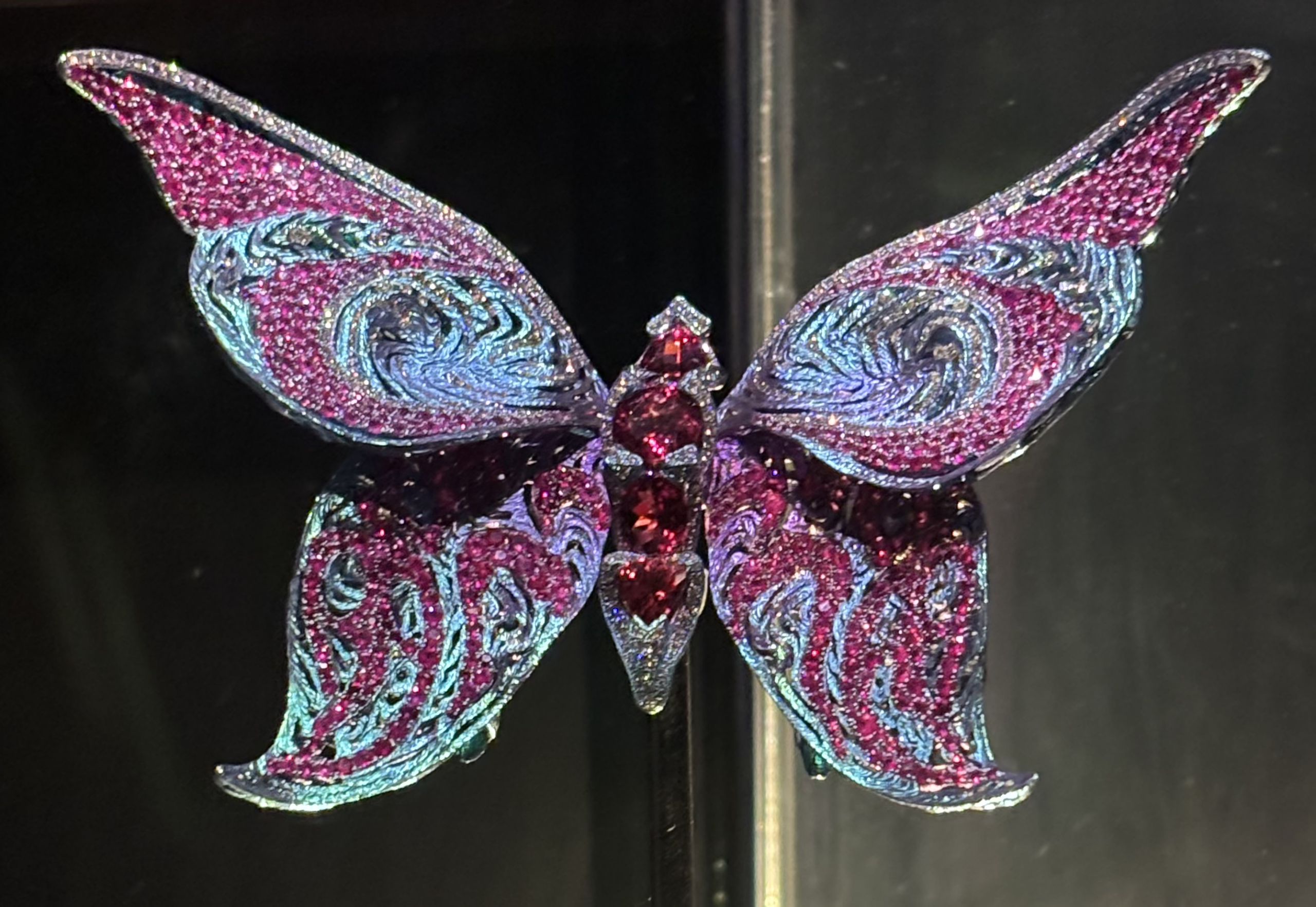
On permanent display at Victoria & Albert’s Jewellery Room:
A titanium, rubellite tourmaline, ruby and diamond ‘Half a Century’ brooch by Wallace Chan, 2022.
The Victoria and Albert Museum in London provides another invaluable resource for jewellery professionals, and has been a vital source of research whilst completing papers, articles and valuations.
Its internationally significant collections chart centuries of jewellery design, from the Renaissance through to contemporary makers, allowing valuers to study the evolution of techniques, materials and aesthetics across different periods.
Examining original examples first-hand helps develop an understanding of what is characteristic of a particular era. Such knowledge is fundamental when identifying later modifications, recognising quality and distinguishing rarity from familiarity – crucial for assessing antique pieces and assessing comparable items during research.
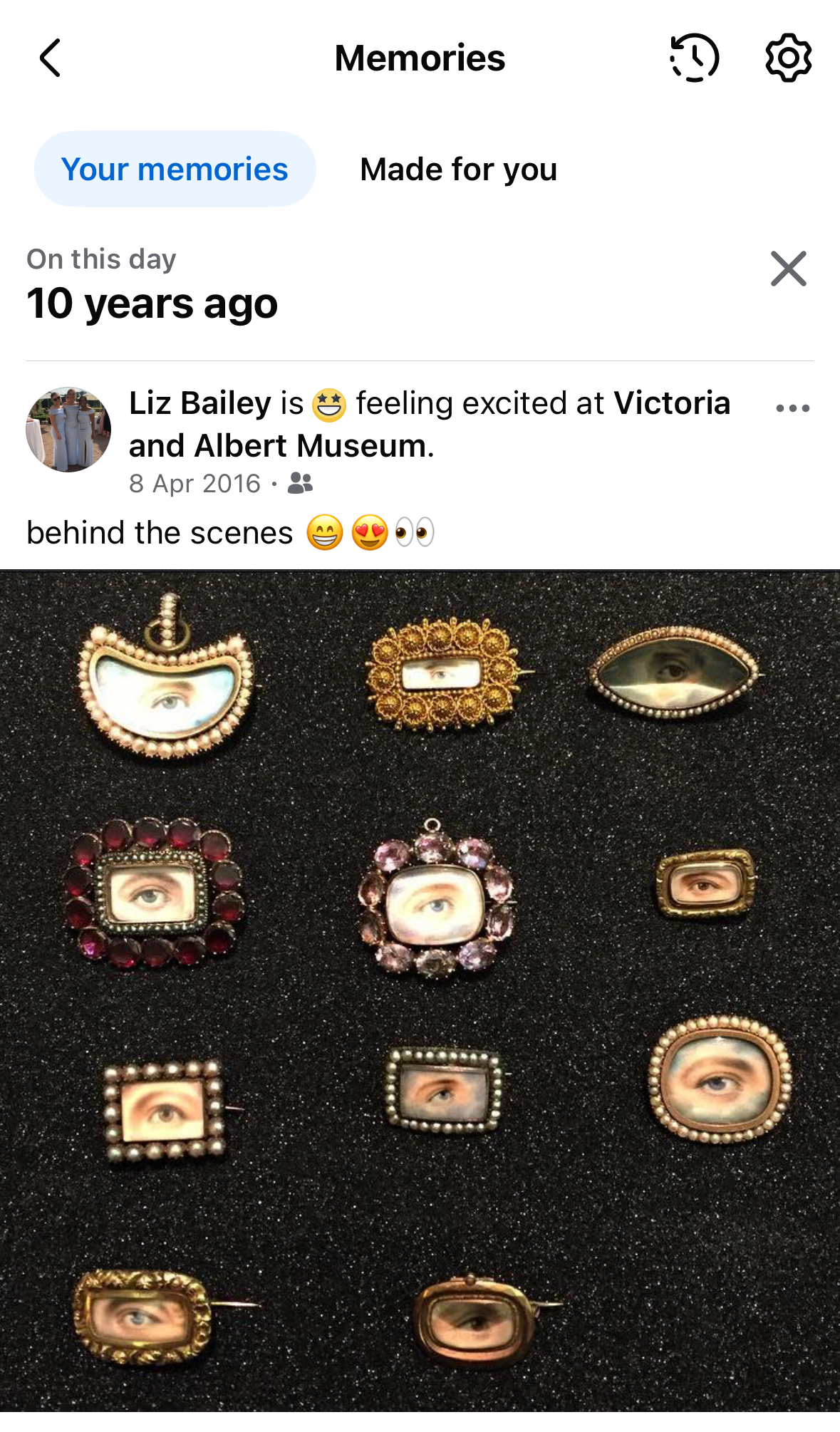
Whilst completing my Master’s Degree in Antiques ten years ago, I spent a significant amount of time scouring the collections at the Victoria & Albert Museum, fortunately handling pieces first hand, an experience that is formative for any valuer or specialist.
A Commitment to Professional Development
The world’s great jewellery collections are more than assortments of beautiful objects. They preserve the history, craftsmanship and creative innovation that continue to shape our understanding of jewellery today.
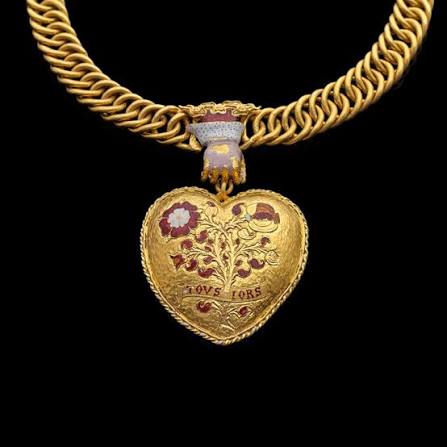
The Tudor Heart Pendant, circa 1518 – Thanks to public funding is now on permanent display the The British Museum.
For the professional valuer, they provide an enduring source of education, inspiration and evidence. Every visit deepens knowledge, strengthens professional judgement and reinforces the standards of independence and integrity upon which meaningful valuations depend.
At The Jewellery & Watch Consultancy, continual professional development is viewed not as an occasional exercise, but as an integral part of delivering accurate, independent and registered jewellery and watch valuations for insurance, probate, family division and private client purposes. It is through this ongoing pursuit of knowledge that we seek to provide every client with advice that is informed, objective and worthy of their confidence.